Period Equity is coming to Facilities Management: How to Go with the Flow
Period Equity is coming to Facilities Management
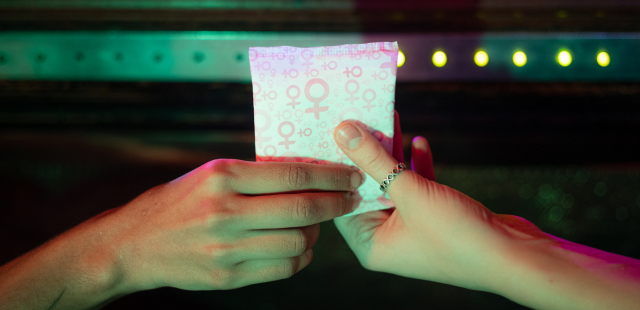
Menstrual equity is a relatively new term making its way into facilities management circles, coined as such thanks to the Menstrual Equity for All Act of 2023, a piece of federal legislation introduced by Rep. Grace Meng of New York and 86 co-sponsors. If it passes, the law will require certain institutions — including schools, governments and companies with more than 100 employees — to provide free menstrual products in their women’s or gender-neutral bathrooms.
Although the bill likely won’t go into effect for some time, more than 60 state bills have passed in the last eight years with similar aims: To make menstrual supplies more accessible to women at school and in the workplace.
But why the sudden interest in periods?
The issue of inaccessible period products isn’t new, but it has entered the realm of politics in recent years as champions of people-first practices and equal rights strive to make school and work environments accessible and inclusive for all — including the half of the population that menstruates every month.
One such champion is Claire Coder, founder and CEO of Aunt Flow, a company that provides free period products to people in need and advocates for stocking bathrooms outside the home with safe, sustainable tampons and pads.
An outspoken advocate for menstrual equality, Coder was a recent guest on OpenWorks’ podcast, The Clean Slate, hosted by our own Trista Sobek, who got the scoop on everything a facility manager needs to know about the legislation, compliance and how these laws might impact their bottom line.
Who is ‘Aunt Flo’, and why should facility managers care?
If you’re a menstruator of a certain age, you may remember bowing out of plans with friends, calling into work or skipping school with the excuse, “my Aunt Flo came to visit.”
Coder was a college student in 2016 when her own “Aunt Flo” showed up for an unexpected visit while she was attending an event.
“I went to the bathroom and there was one of those archaic, quarter-operated tampon and pad dispensers,” Coder recalled. “Certainly it was rusty, and I didn’t have a quarter because no one carries coins. And I thought, Wow, if toilet paper is offered at no cost, why aren’t period products? Why aren’t period products?”
She promptly dropped out of school and started building her company, Aunt Flow. “I knew nothing about the industry. I was 18, but I just thought it was so messed up that this is the way that it was. There had to be a better solution.”
Coder quickly learned just how much companies like hers were needed. Story after story poured in from girls who were forced to go to the nurse’s office when they got their period in school — and felt the sting of public humiliation, knowing that everybody knew.
There were stories from women who got their period at work and had to make do with toilet paper or paper towels in a pinch. Stories from transgender and gender-nonconforming people who have long faced a host of challenges when they get their period away from home.
None of this is new, says Coder. “The need has always been there, for forever. Women just dealt with it. We slipped our tampons up our sleeves as we marched ourselves to the bathroom. We just adjusted to the situation.”
But the ones who had access to a school nurse or who had a tampon to palm surreptitiously on the way to the washroom — those were the lucky ones.
The impact of period poverty
Barriers to access to period products, known as “period poverty,” has a far-reaching impact on women’s and girls’ health. A study of low-income women found that two-thirds couldn’t afford period supplies in the last 12 months — and 21% couldn’t afford them any month during the previous year.
A small part of the larger issue is that menstrual products are still deemed non-medical, non-essential “luxury” items in many states.
As such, they’re subject to state and local sales taxes ranging from 4.7% to 9.9%. This so-called “tampon tax” makes period products that much more expensive and inaccessible.
As the cost of period products increases — the price of pads rose 8.3% and tampons increased by 9.8% in 2021 — the risks to low-income menstruators increase as they make do with sub-par products or concoct their own out of toilet paper, paper towels or old clothes. These common practices can cause vaginal and urinary tract infections, toxic shock syndrome and serious reproductive health conditions.
Hence all of the period product legislation, which is gaining steam across the country.
“Ann Arbor, Michigan, was the first city to require all bathrooms outside of the home to offer free period products,” says Coder. “This includes bars and restaurants and movie theaters and the convention center. And now, New York has similar legislation that’s expected to pass in 2024. That would be the first state level mandate, and there’s consistent support for it.”
One supporter is the International Sanitary Supply Association (ISSA), the leading trade association for the cleaning, hygiene and facility management industry. ISSA, in partnership with its charity, the ISSA Hygieia Network, launched its End Period Poverty Campaign in late 2022. “We are working to advocate for a world where period-friendly bathrooms are the rule rather than the exception,” said John Nothdurft, ISSA Director of Government Affairs.
The campaign, with support from Aunt Flow and other period product companies, made a big impact in 2023: Maine, Minnesota, New Jersey, New Mexico and Ohio joined the roster of states requiring free period products in schools, and Texas came on board to the group of 29 states that have abolished the tampon tax. ISSA also had a hand in the Menstrual Equity for All Act of 2023 and the Period PROUD Act of 2023, which will provide targeted funding for states to increase the availability of menstrual products for those with limited access.
How do schools and businesses benefit from period equality?
To garner support and help ensure compliance from institutions affected by existing and impending legislation, Coder has begun to partner with facility managers and facilities management companies to help them understand the laws, the importance behind them — and their benefits as a win-win for everyone involved.
Here’s how providing access to free period products helps organizations meet their ESG initiatives and improve their bottom line.
It promotes gender equality and good hygiene.
While menstruation and period products are a fundamental aspect of reproductive health for women, men face no comparable challenge. Period poverty affects everyone who menstruates — but especially people who are low-income, students or transgender. It encompasses not just the inability to afford menstrual products but also a lack of access to clean washroom facilities and the sanitary disposal of used period products — something Aunt Flow is currently working on.
“Period products are bio hazardous materials, but for some reason we aren’t treating them that way,” Coder says. “Disposal of period care is disgusting — if you’re a janitor, you know what I’m talking about. If you’re a person with a period, you know what I’m talking about. Our newest product that is coming in August is a solution that makes the whole process better — so stay tuned!”
It improves productivity and attendance.
Visits from “Aunt Flo” have a price tag for schools and businesses: A St. Louis University study found that 36% of employed women miss one or more days of work per month due to a lack of menstrual products. Another study found that 64% of menstruating high school students were unable to afford period products at least once during the school year — and 34% missed school due to a lack of period supplies.
“By offering [period products] in the bathroom, not in the nurse’s office, attendance actually increases amongst girls,” says Coder. “And as a company that now supplies over 750 K–12 schools across the United States, we are proud to see some of those impact metrics.”
It supports inclusivity.
Periods can be upsetting for people who are trans or nonbinary or who experience gender dysphoria. One study found that 66% of transgender menstruators felt unsafe and 68% felt uncomfortable using the men’s room while on their periods.
As part of their ESG initiatives and inclusivity practices, a growing number of schools, businesses and local governments are taking steps to provide an all-gender bathroom stocked with period supplies for menstruating employees and visitors. These organizations will be on the leading edge of attracting top talent as notoriously outspoken Gen Z matures and makes its mark on workplace culture — and equally forthright Gen Alpha begins to enter the workforce.
It promotes period dignity.
The United Nations deems period dignity a human right and cites the stigma surrounding menstruation — that it’s gross, dirty and shouldn’t be discussed in public — as a major contributor to period poverty.
A 2018 study found that 58% of women felt embarrassed during their periods, and 52% felt shame. While menstruation has long been considered a taboo topic for polite conversation — more than half of the men in the study said it’s inappropriate to discuss periods in the workplace — that’s quickly changing.
“My generation, Gen Z, is speaking up for what we need and what we expect,” says Coder. “Offices are always focused on amenities like kombucha on tap and a ping pong table, but at Aunt Flow, we’re like, okay, but let’s think about the basic necessities: Toilet paper, soap, period products.”
It protects the environment.
Providing period products helps facility managers meet ESG targets through sourcing eco-friendly menstrual products made with biodegradable, nontoxic materials.
“We are constantly making sustainable steps to ensure that our products are great for the environment and great for the user,” says Coder, who notes that Aunt Flow products are plastic-free and made with 100% ozone-certified organic cotton. “We disclose all of our ingredients, which is really important. And we’re meeting those sustainability initiatives for LEED- or WELL-certified buildings” without sacrificing the comfort and wellbeing of people who have periods.
How OpenWorks helps facilities stay compliant
Facility managers have long faced a bevy of challenges in ensuring compliance with new and changing requirements from CDC, OSHA and industry regulators — and period equity legislation is no different.
While the cost of providing free period products will need to be added to the facility budget, it’s probably not as much as you might think: “We’re not talking about an initiative that breaks the bank here,” Coder says, noting that it costs around $5 per menstruating student or employee per year to implement Aunt Flow across an organization. “We’re talking about a basic necessity that can be implemented super quick and have a really meaningful impact on your facility.”
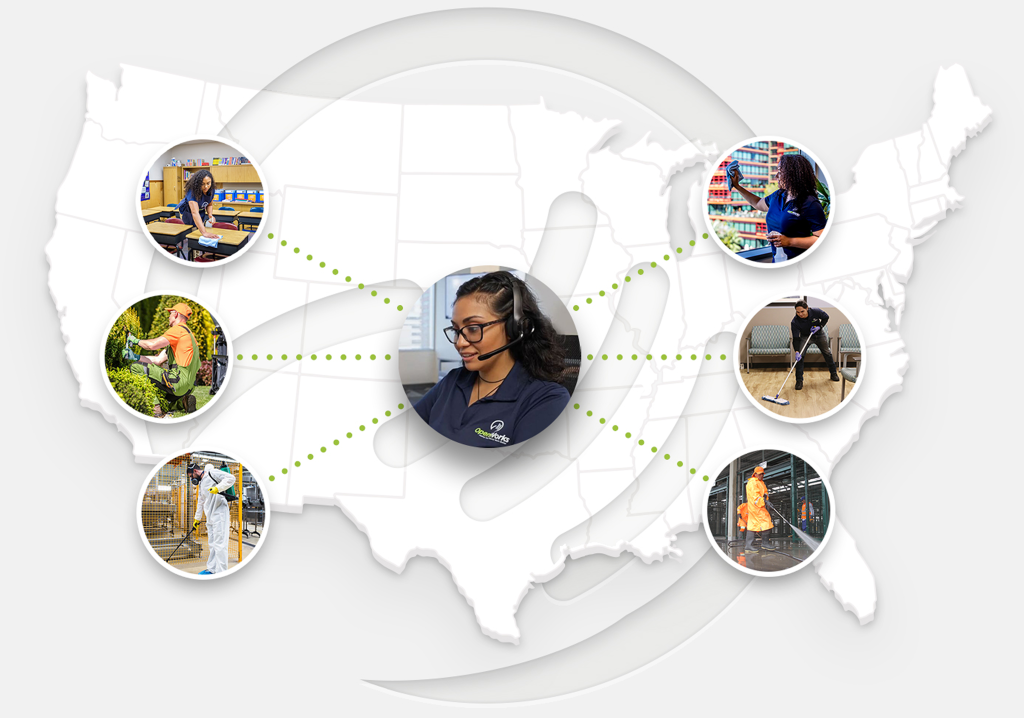
OpenWorks’ integrated facility management services help FMs in every industry stay in compliance while addressing budgetary, supply chain and implementation considerations.
We partner with many providers to supply our customers with the period products and ADA-compliant dispensers they need to comply with laws in their cities and states.
Our expertise in multi-site facility services ensures consistent implementation across all of your buildings, whether you’re a local school district or a large company with campuses across multiple states.
But many of our clients aren’t waiting for legislation to pass before implementing free period products for their employees or students. Period-positive initiatives offer a chance for governments, schools and businesses to walk the walk when it comes to their DEI policies and ESG initiatives, and many organizations see the opportunity for a substantial ROI. And that’s good for everyone — period.
Find out more about us by getting a personalized, complementary consultation. Learn more today!